

At Biancalani, we never stop moving forward. Our continuous pursuit of excellence has led us to take another important step in the digital transformation of our production processes.
Why this new step?
Over the years, we have built a solid technological infrastructure with our CAD systems Creo Parametric 10.0 and ERP BMS, which have supported our growth. But the textile market evolves rapidly, and we always want to stay one step ahead.
This is why we decided to integrate a PLM (Product Lifecycle Management) system that would allow us to further optimize our processes, creating even more effective synergies between design, production, and administration.
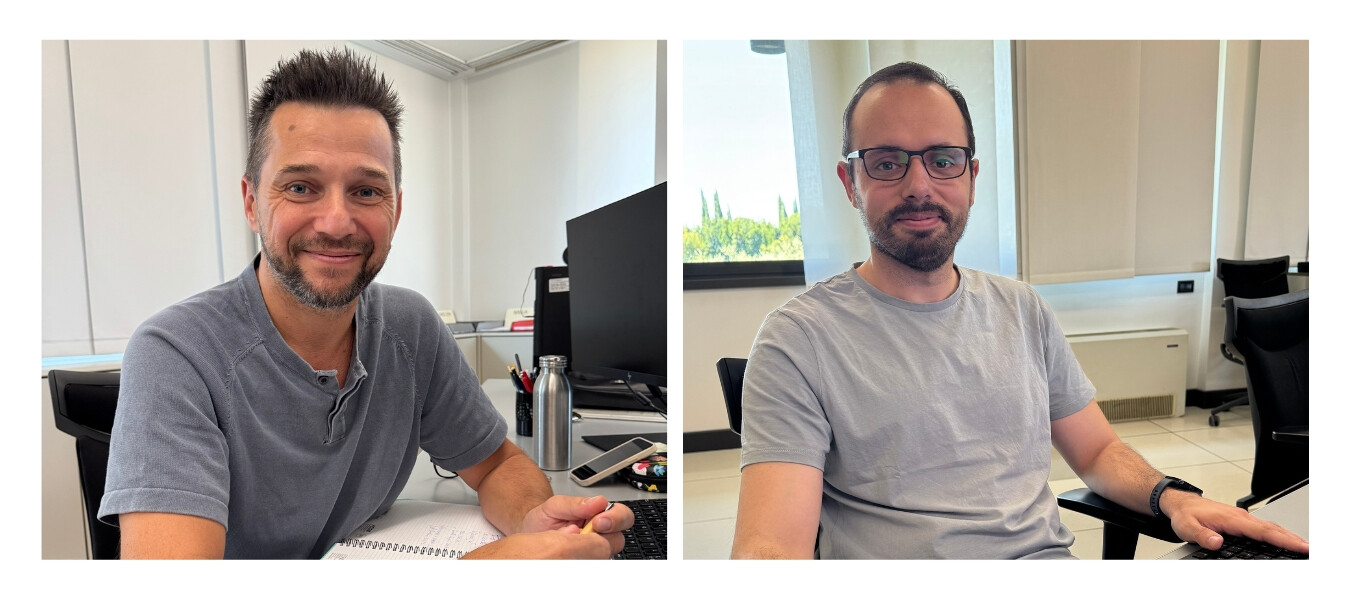 Maurizio and Leonardo
Our choice: a state of the art PLM platform
We chose to implement a market-leading PLM platform, supported by MADE 4.0 and specialized partners, to create a fully integrated ecosystem for managing our products’ lifecycle.
What have we achieved concretely?
The new PLM system has brought us tangible and measurable improvements:
• Automatic coding of articles and documents
• Structured management of engineering BOMs (eBOM) and manufacturing BOMs (mBOM)
• Clear and traceable approval workflows
• Complete integration between CAD and ERP
• Total control of revisions and reduction of non-conformities
 Cecilia and Iacopo
The results speak for themselves
• 20% reduction in time-to-market in design and technical release phases
• 5% reduction in post-sales costs per product unit
• Significant improvement in information quality and traceability
“With the adoption of the new PLM system, we have centralized the company’s technical knowledge, improving not only design efficiency but also our ability to respond promptly to market changes and requirements” – Eng. Maurizio Toccafondi, Research and Development Manager
The technological infrastructure behind innovation
The project required creating a next-generation technological environment:
• Two dedicated servers (application and worker) on Windows Server 2022
• Integration with corporate Active Directory
• Automatic coding system for components and orders
• Structured change management processes
• Multi-format publishing for CAD data
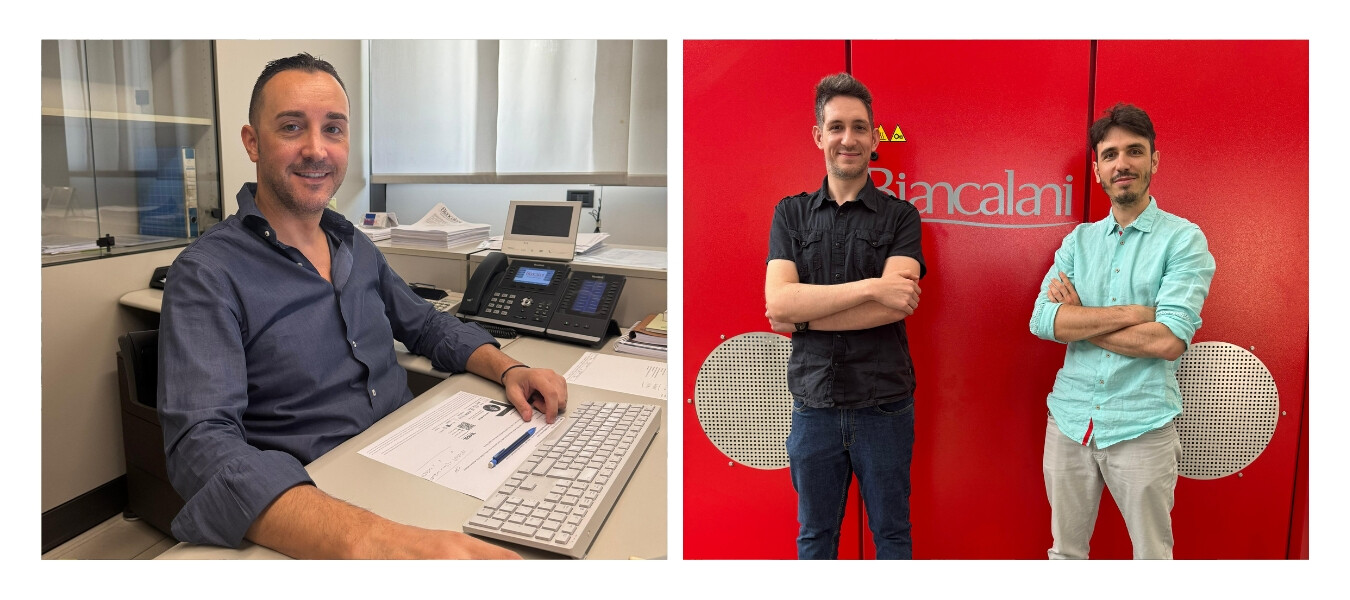 Angelo, Mirko and Ivan
We also implemented specific document categories (technical specifications, manuals, testing, reports) with their dedicated lifecycles to ensure maximum consistency and version control.
Perfect integration with our systems
One of the most interesting aspects is the direct integration with our Creo CAD: now the structure of assemblies and components is automatically transferred to the PLM, where we manage all technical data, attributes, and approval cycles according to ISO 9001 standards.
The result? A transformation that has taken us from already solid processes to a completely data-driven model, enabling even faster, more precise, and collaborative decisions.
Why are we sharing this story?
This project represents our concrete vision of Industry 4.0. We want to demonstrate that digital innovation is not reserved only for large multinationals: even a small enterprise like ours can and must invest in advanced technologies to build tomorrow’s competitiveness.
Investing in digitalization today means laying the foundations for continuous innovation, sustainability, and industrial resilience that the market demands.
Source: Biancalani