

We are frequently asked about the impact of warp tension variations on the properties of woven fabrics. Below, we provide a simplified and clear overview of these effects and explain the most important aspects in an easy-to-understand manner.
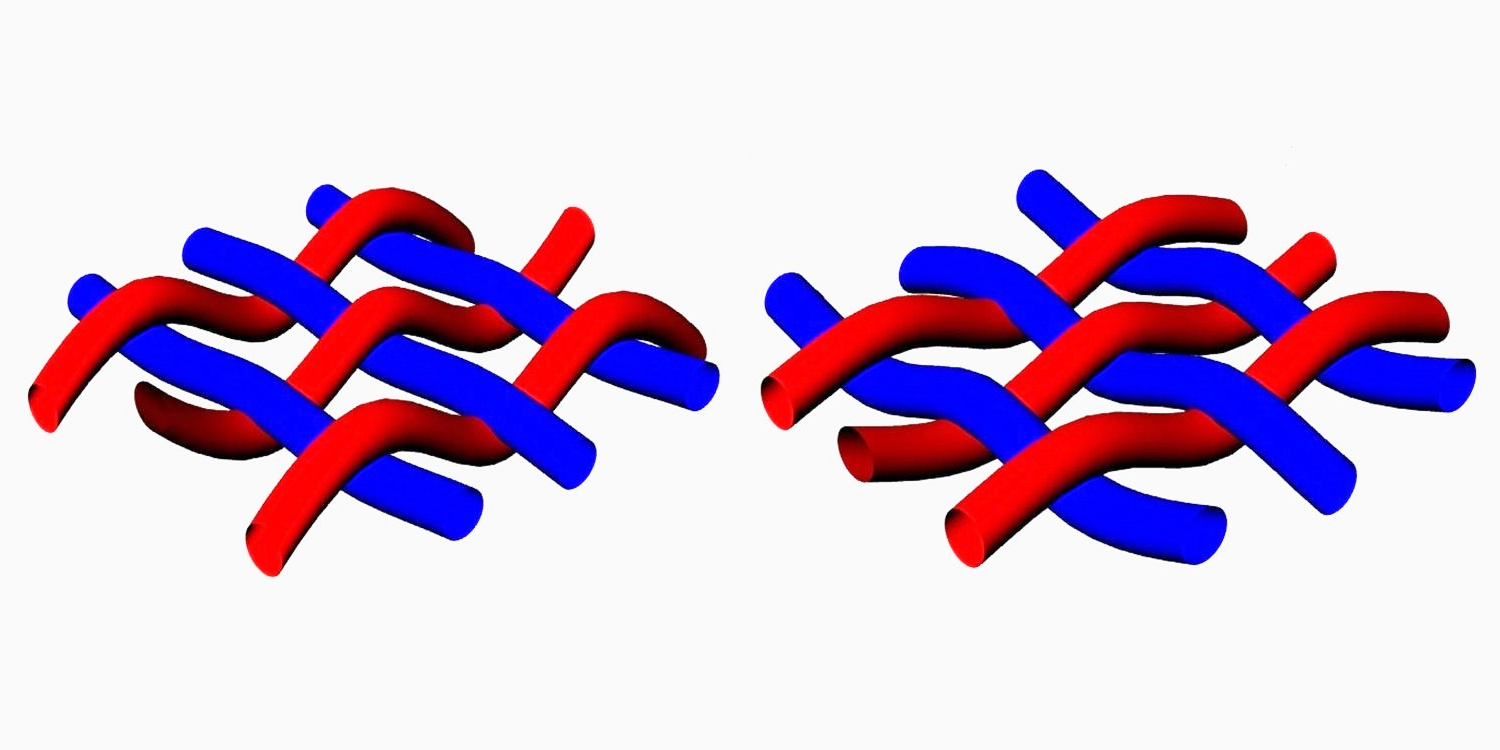
Warp tension plays a crucial role in determining the structural and mechanical characteristics of a fabric. Variations in warp tension influence the interlacing behavior of the yarns, fabric density, mechanical stability, and the overall appearance of the fabric.
1. Yarn Interlacing and Binding Formation
- High warp tension reduces the bending of the warp threads, resulting in fewer warp interlacings and more pronounced weft interlacings. This produces a flatter and less voluminous fabric structure.
- Low warp tension allows greater flexibility of the warp threads, leading to increased warp interlacings and reduced dominance of the weft. This creates a more voluminous and softer fabric.
2. Fabric Density (Ends and Picks per cm)
- With high tension, the warp threads are stretched, which can reduce the weft density due to limited space for weft insertion.
- Lower warp tension allows for greater weft insertion, resulting in higher weft density.
3. Fabric Defects and Process Stability
- Excessive warp tension may lead to warp thread breakage, yarn elongation, or defects such as missing picks and uneven edges.
- Too little tension can cause loop formation, inadequate weft beat-up, and inconsistent binding points, negatively impacting fabric quality.
4. Handle and Appearance
- Fabrics produced with high tension have a denser structure and generally feel smoother and firmer to the touch.
- Lower tension results in a softer, bulkier fabric with a looser appearance.
5. Dimensional Stability and Uniformity
- Optimal warp tension ensures dimensionally stable fabrics with balanced yarn distribution and minimal distortion.
- Deviations from ideal tension can lead to shrinkage, skewing, or puckering, especially after wet finishing or further processing.

Color Key:
Blue = Warp Yarn
Red = Weft Yarn
High warp tension results in reduced warp interlacing and increased weft interlacing.
Low warp tension leads to increased warp interlacing and reduced weft interlacing.

Source: Crealet