

The global fashion and textile industry is entering a new era where textile recycling scale is no longer just an innovation goal — it is becoming a manufacturing necessity. As brands accelerate circular economy commitments and sustainability targets, the industry must now solve one critical challenge: how to transform recycled fibres into stable, commercially viable, factory-ready production systems.
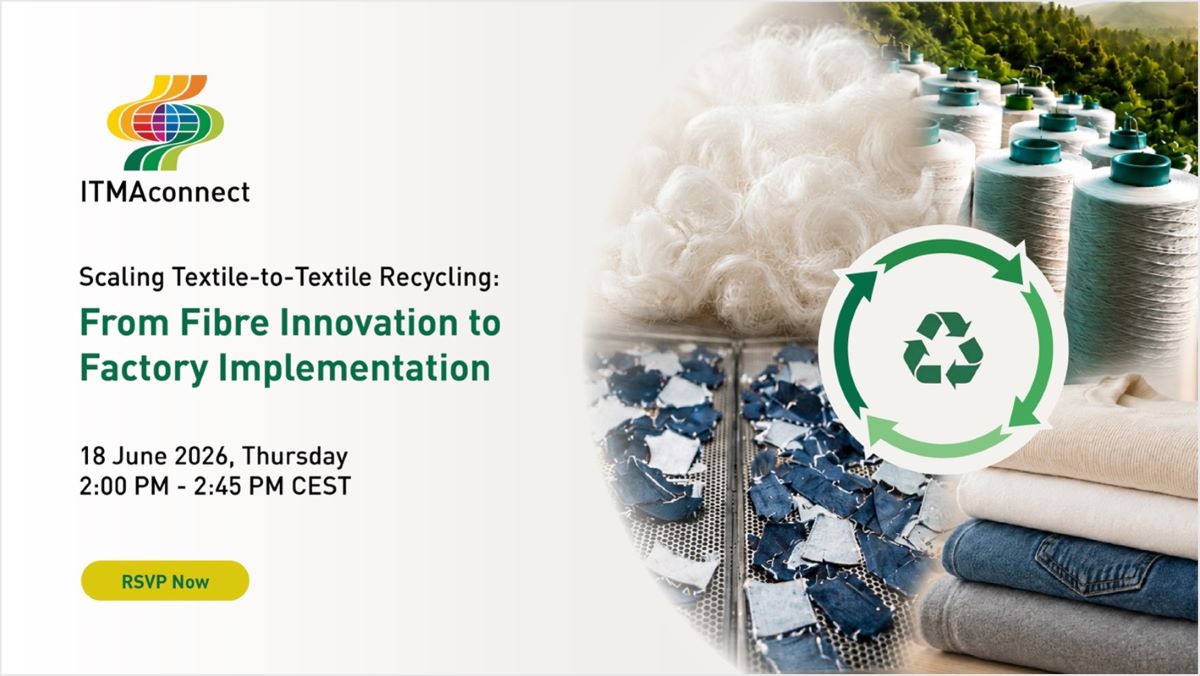
While textile-to-textile recycling technologies continue to evolve rapidly, scaling recycled fibres into consistent, cost-effective industrial manufacturing remains a major operational hurdle. From feedstock contamination and fibre inconsistency to spinning performance and mill efficiency, manufacturers across the supply chain are working to bridge the gap between innovation and implementation.
This live webinar brings together leading experts from recycling, spinning, and textile manufacturing to explore what it truly takes to scale recycled fibres beyond pilot projects and into industrial reality.
Moderated by Sophie Ridler from Textile Exchange, the session will provide practical insights into the technical, operational, and commercial realities shaping the future of circular textile manufacturing.
Why Textile-to-Textile Recycling Matters
The textile industry generates millions of tons of waste annually, creating growing pressure for manufacturers and brands to adopt circular production systems. Textile-to-textile recycling offers a pathway toward reducing reliance on virgin fibres while supporting sustainability, waste reduction, and long-term resource efficiency.
However, scaling recycled fibre production introduces major complexities that affect manufacturing stability, product quality, and overall cost competitiveness.
Industry leaders are now focusing on how advanced recycling technologies, automation, fibre sorting systems, and integrated manufacturing strategies can help create scalable circular textile ecosystems.
Key Topics Covered During the Webinar
This session will examine the real-world barriers and operational realities involved in scaling textile recycling, including:
- Feedstock limitations such as mixed materials and contamination
- Variability in recycled fibre quality and processing consistency
- Adjustments required in spinning, dyeing, and textile manufacturing processes
- Impact on efficiency, quality, and production stability at mill level
- Cost competitiveness versus virgin fibres
- Certification requirements and supply chain alignment challenges
- The growing role of automation and sorting technologies in circular textile production
Participants will gain valuable insights into how textile manufacturers are adapting production systems to support large-scale recycled fibre integration while maintaining quality, efficiency, and commercial viability.
The Growing Role of Automation in Circular Textile Manufacturing
Automation and intelligent sorting technologies are rapidly becoming essential components of modern textile recycling infrastructure. Advanced fibre identification systems, AI-powered sorting, and manufacturing integration are helping improve recycled fibre consistency and reduce contamination issues across supply chains.
As circular economy initiatives expand globally, scalable textile recycling systems will increasingly depend on collaboration between recyclers, mills, manufacturers, brands, and certification organizations.
Learn more about global sustainability initiatives from:
Who Should Attend?
This webinar is designed for:
- Textile manufacturers
- Sustainability leaders
- Fashion brands
- Recycling innovators
- Fibre producers
- Supply chain professionals
- Circular economy specialists
- Textile mill operators
- Product development teams
Whether you are exploring recycled fibre integration or scaling existing circular manufacturing systems, this session offers practical insights directly from industry experts.
Live Audience Q&A
Attendees will also have the opportunity to engage directly with industry experts during the live audience Q&A session. Questions may also be submitted during registration.
Secure Your Spot
As the textile industry moves toward scalable circular production, understanding the operational realities of textile recycling scale has never been more important.
Register now to discover how recycled fibres are transitioning from innovation concepts into commercially viable factory implementation strategies shaping the future of sustainable textile manufacturing.
Discover: ITMA: Start-Up Valley, Where the Future of Textiles is Launched