

The new 2777 ceramic oiler from Barmag is engineered specifically for fine denier yarns and sensitive microfilament applications. Designed to improve yarn quality, reduce spray-off by up to 50%, and increase spinning stability, the latest ceramic oiling device helps manufacturers achieve more cost-effective production while ensuring consistent downstream processing performance. With optimized geometry and integrated ceramic shaft technology, the Type 2777 addresses the limitations of standard oilers in fine-titer spinning environments.
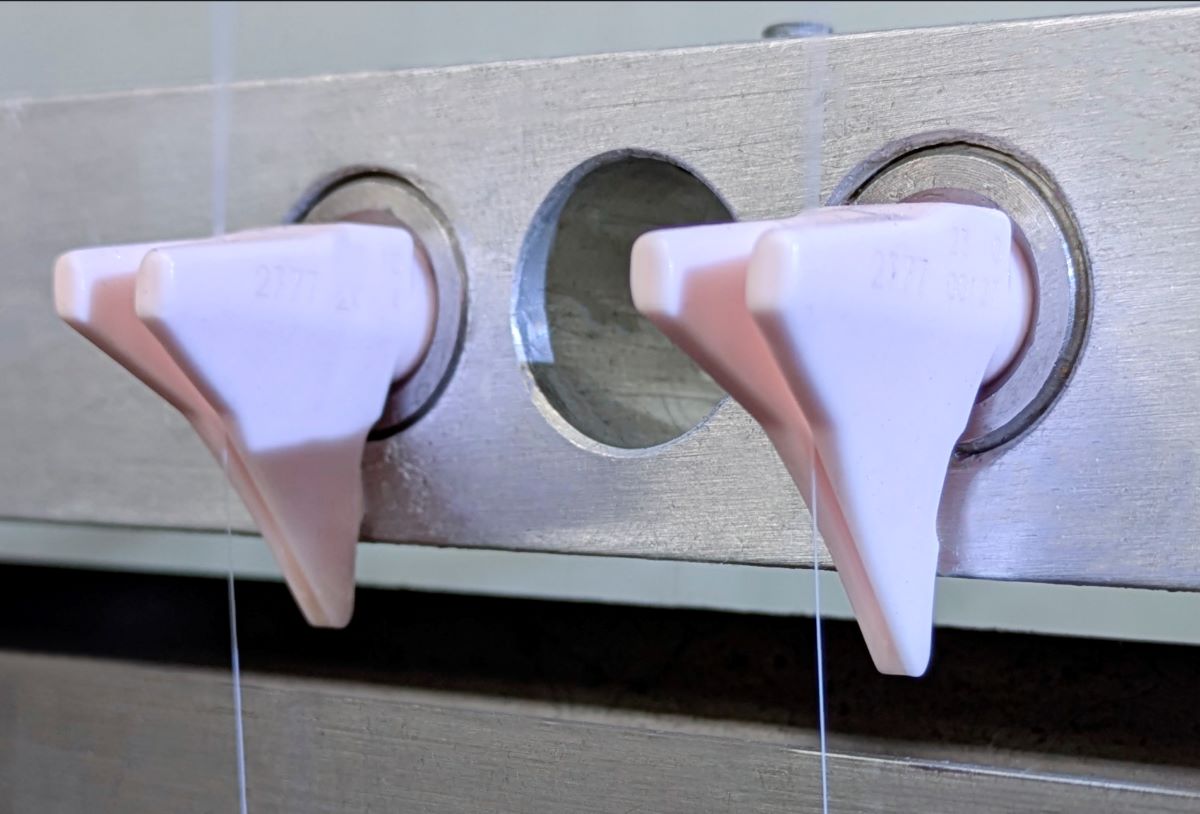
Specialist in fine counts: New type 2777 ceramic oiler
With the new Type 2777 ceramic oiler, Barmag has added a solution for fine titers and microfilaments to its portfolio of original parts.
The new design, based on the proven model 2888, is significantly slimmer and has been specifically optimized for fine titers and sensitive filament counts. While the type 2888, as an all-rounder, demonstrates its strengths in the high denier range and up to 288 filaments, the type 2777 offers the long-awaited solution for the lower fineness range. This is where standard oilers often reach their physical limits, leading to uneven deposits in the corners or instability in the yarn path when processing finer titers. Here, the narrower variant excels with maximum precision in the process.
.
Both oiler types are designed for reduced spray-off thanks to their special geometry. In the fine-titer range, the new design reduces spray-off by a further 50% compared to the use of standard oilers. Extremely easy to adjust, the oiler impresses with its tolerance for installation deviations of ±2°. This largely prevents uneven oil application. The integrated ceramic shaft eliminates the typical errors that occur during the labor-intensive process of bonding metal shafts, thereby ensuring greater process stability.
Ceramic quality has a direct impact on yarn quality
The quality of yarn-guiding components in the spinning process is also a decisive factor for downstream processing. Inferior ceramics have a negative impact on yarn quality, which manifests itself in the downstream processing. Initial market deployments of the new oiler confirm the yarn’s improved downstream performance—a result shared by other ceramics from Barmag.
For yarn manufacturers, the ability to schedule the replacement of wear parts is particularly important: Thanks to consistently high manufacturing quality, components wear out in a controlled and synchronized manner—rather than unpredictably, as is the case with inferior components. This enables greater process stability and predictive maintenance.
Discover: Barmag and Neumag Showcase Manmade Fiber Innovations at ITM 2026